Pioneers of the world's first industrial carbon fiber fan blade technology
To reduce industrial energy consumption and conserve water through better engineered cooling systems.
To be the most trusted engineering partner for critical industrial cooling systems, recognised for measurable energy savings, water conservation and avoided emissions.


Proof over promises
Every claim is backed by measurable, verifiable field data.

Responsible and reliable
We issue a written performance guarantee before installation at your plant, proving a minimum 15–30% power reduction or 7.5–15% airflow increase.

Engineered honesty
We tell customers what might go wrong. We put guarantees in writing. We then exceed what we promised.
Consequence thinking
A one-degree drop in cooling water temperature can mean megawatts of recovered generation, crores of retained revenue, and tonnes of avoided CO₂ every year. That is the value we design to deliver. The specification follows.
Passionate craft
Carbon fiber blades developed in our own facility. Campbell diagrams. AMCA 210 testing. This depth cannot be faked.
Global standard, Indian origin
Manufactured in India.
Held to AMCA, ISO, IS standards.
THE LEADERSHIP TEAM
The leadership team at Encon is not a management layer placed over an engineering organisation. It is the engineering organisation made of people who have spent decades in plants, on sites, and inside the problems they are passionate about solving.




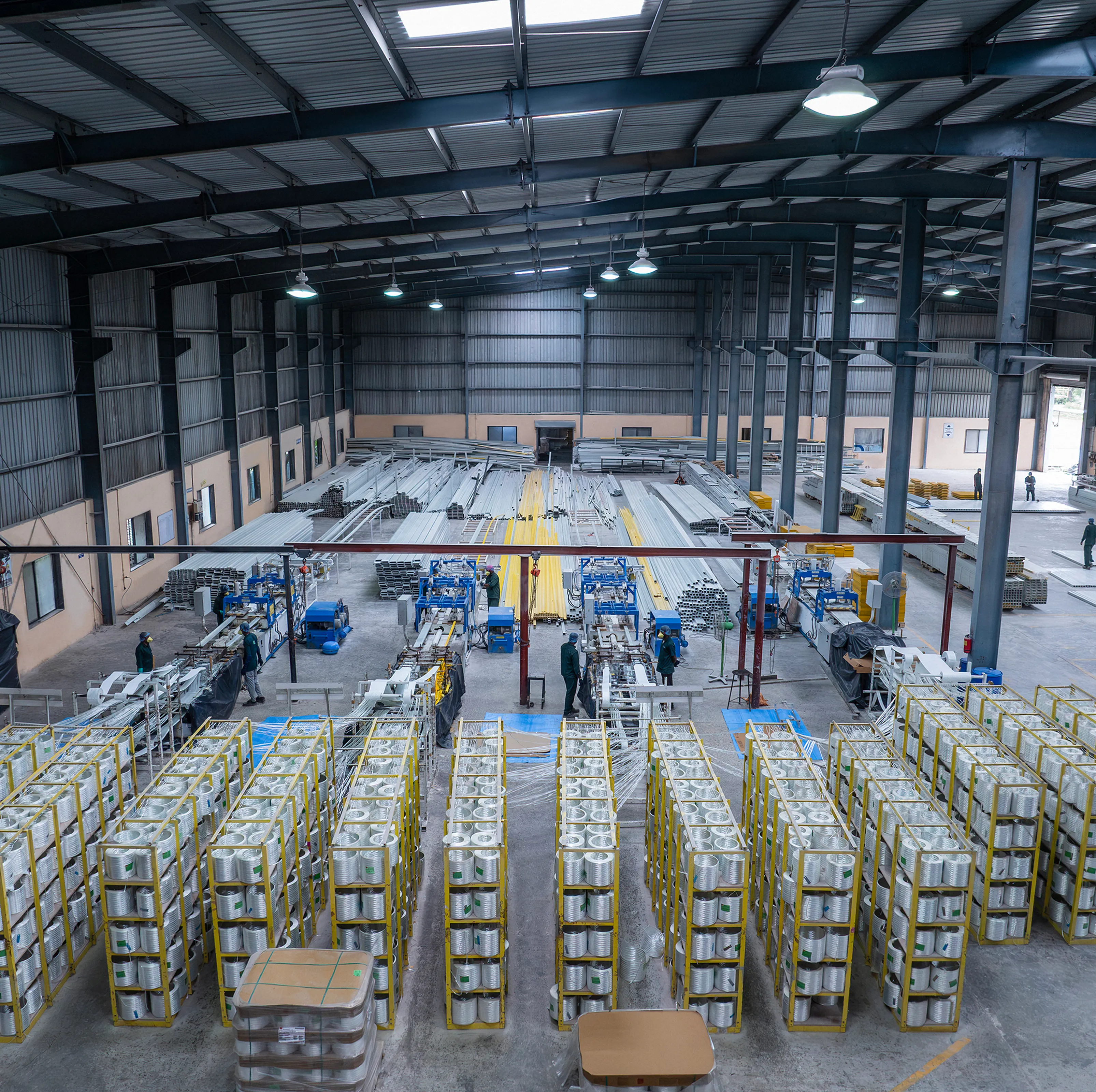
Made in India,
state-of-the-art facility.
Encon manufactures in India. The fact is built on the conviction that Indian engineering held to global standards should change how the world thinks about Indian-made products, and that the only way to change that perception is to keep building here, better.
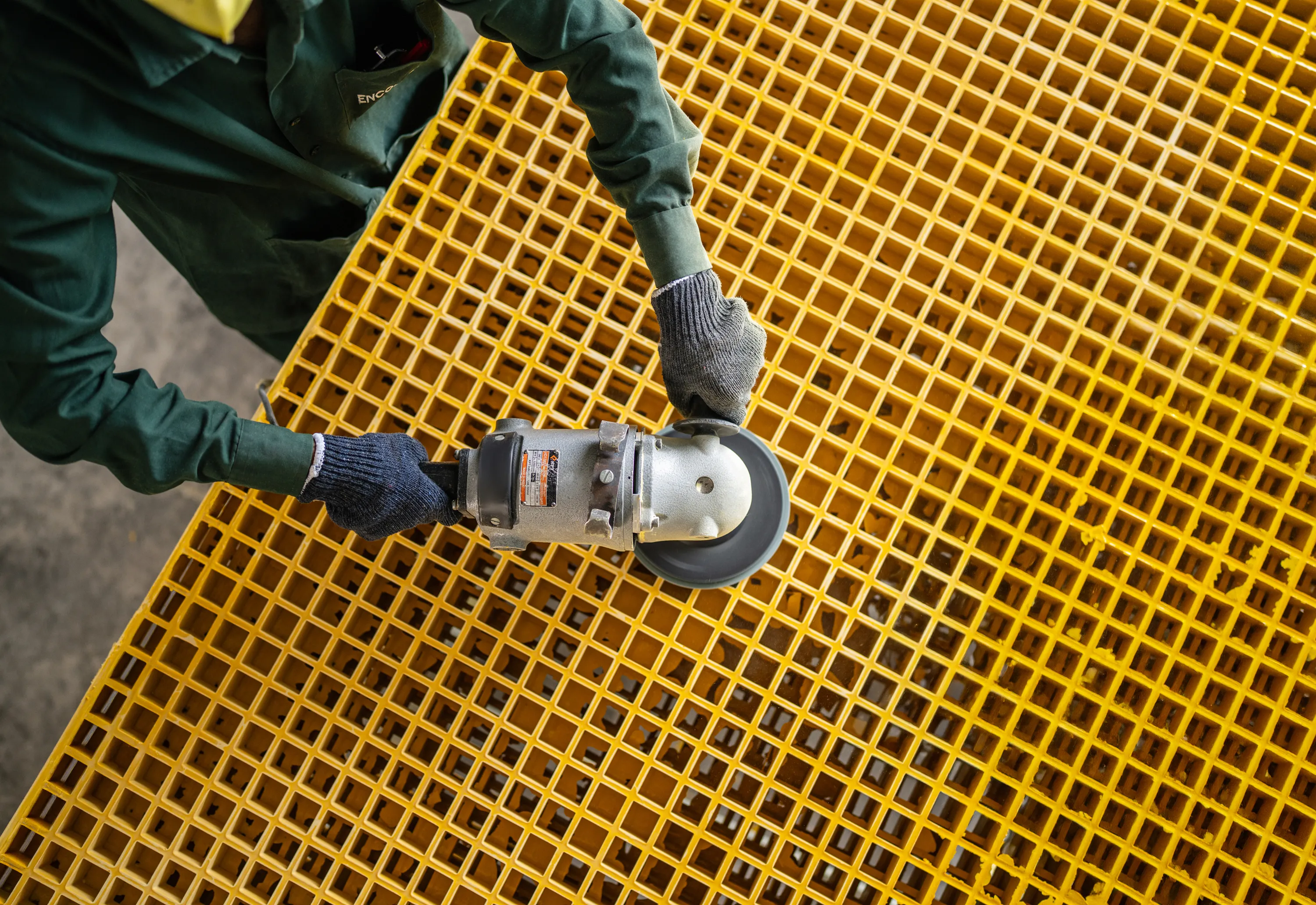
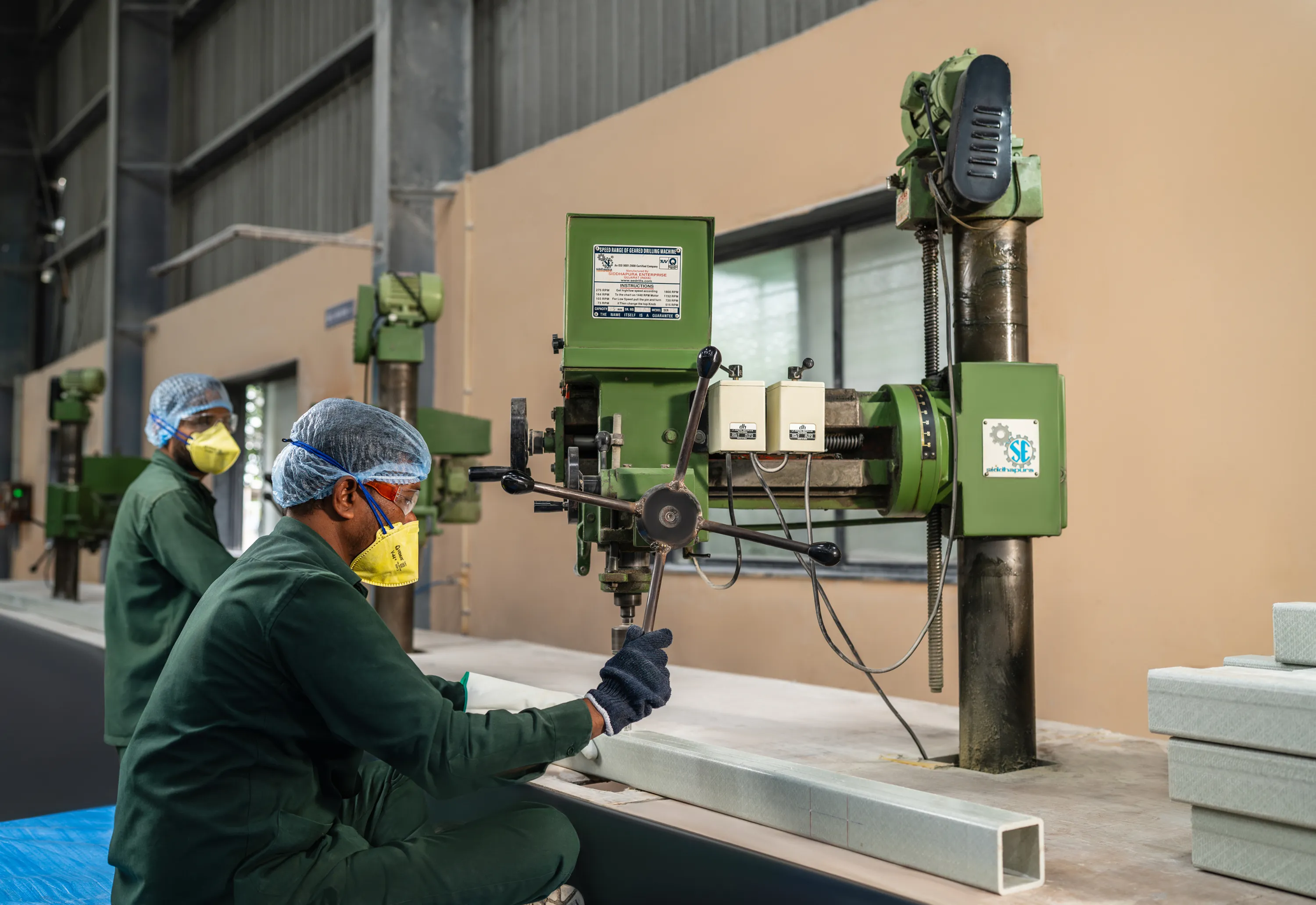
Encon operates dedicated manufacturing facilities in Maharashtra, each designed for a specific product category, and each built to the engineering tolerances that its written performance guarantee requires.
Together they form a vertically integrated manufacturing capability that gives Encon direct control over every variable that affects product quality.
ENGINEERING AND R&D CAPABILITIES
[ 35+ years of aerodynamic research.
Applied daily. ]
Encon's engineering capability starts with applying aerodynamic science to the demanding conditions of industrial cooling. The engineering team does not adapt standard designs to fit applications. Instead, it designs each application based on installation characteristics, process temperatures, site conditions, operating hours, structural constraints, and performance requirements, with guarantees in writing. Every blade profile originates from NACA aerofoil geometry, adapted through computational fluid dynamics analysis for the installation's specific pressure ratio, flow velocity, and Reynolds number.
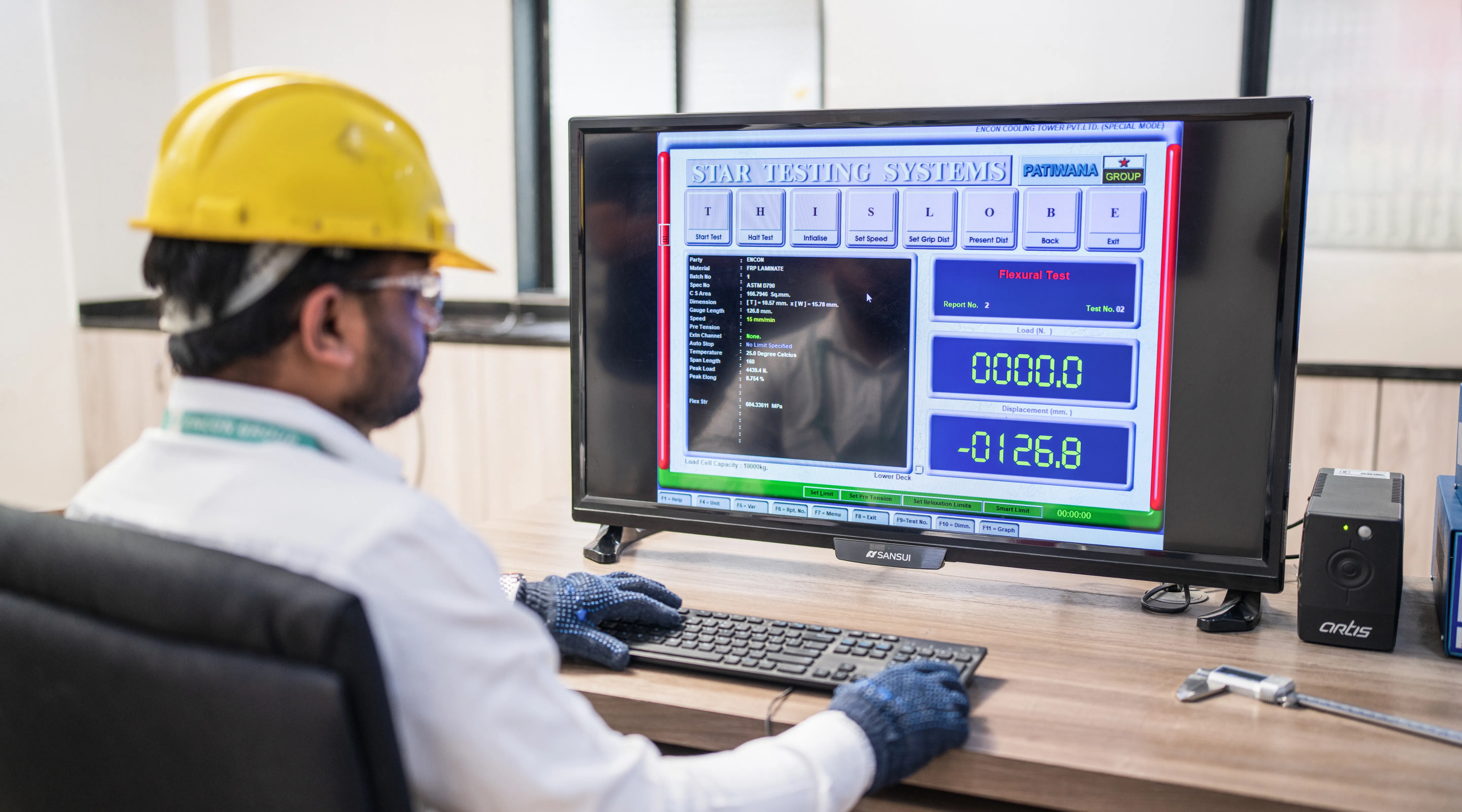
Encon's engineering capability extends beyond blade design to complete system analysis. When a plant faces cooling problems, such as reduced condenser vacuum, rising CW temperatures, or unexplained efficiency loss, Encon responds with a whole-system approach, not just the fan.
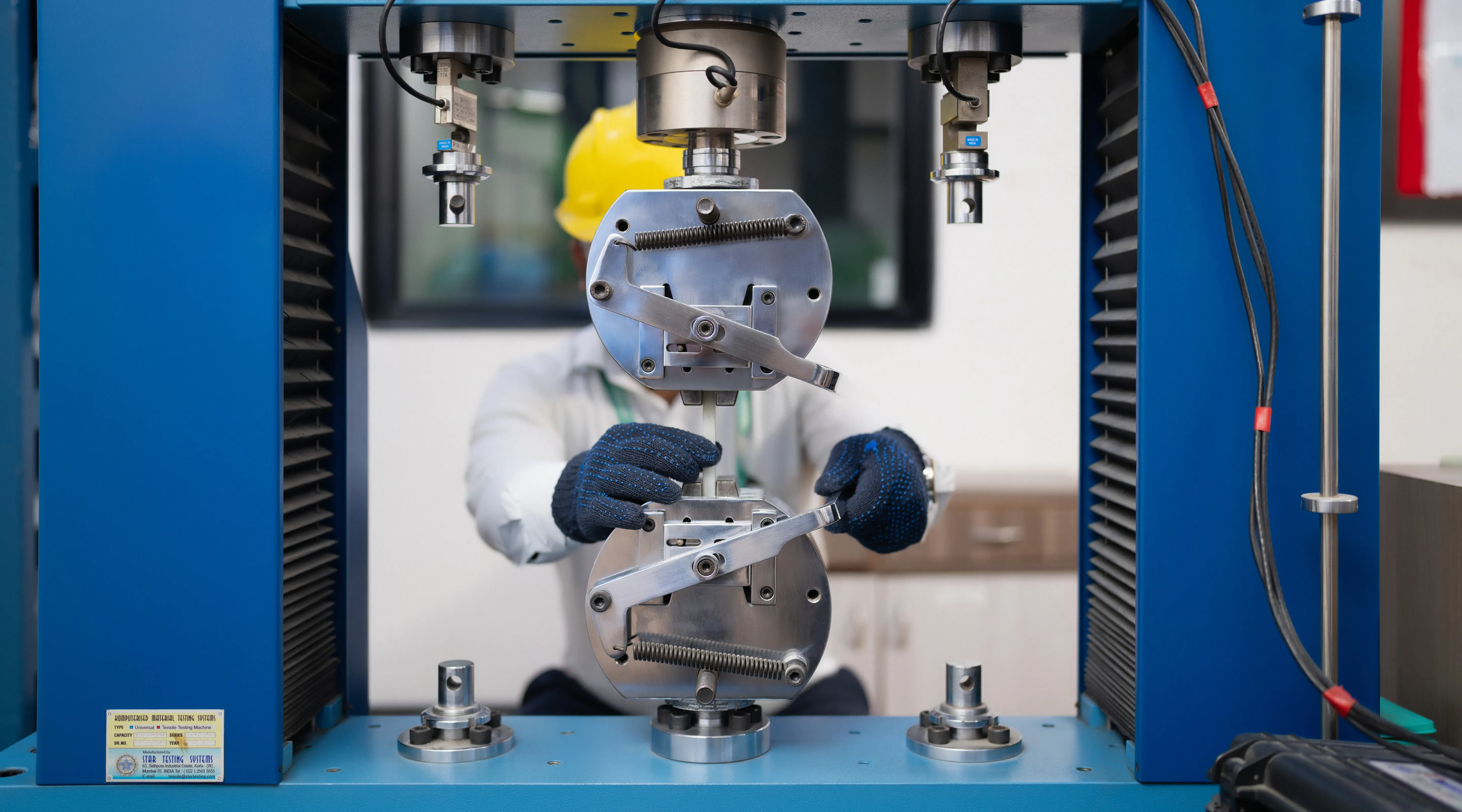
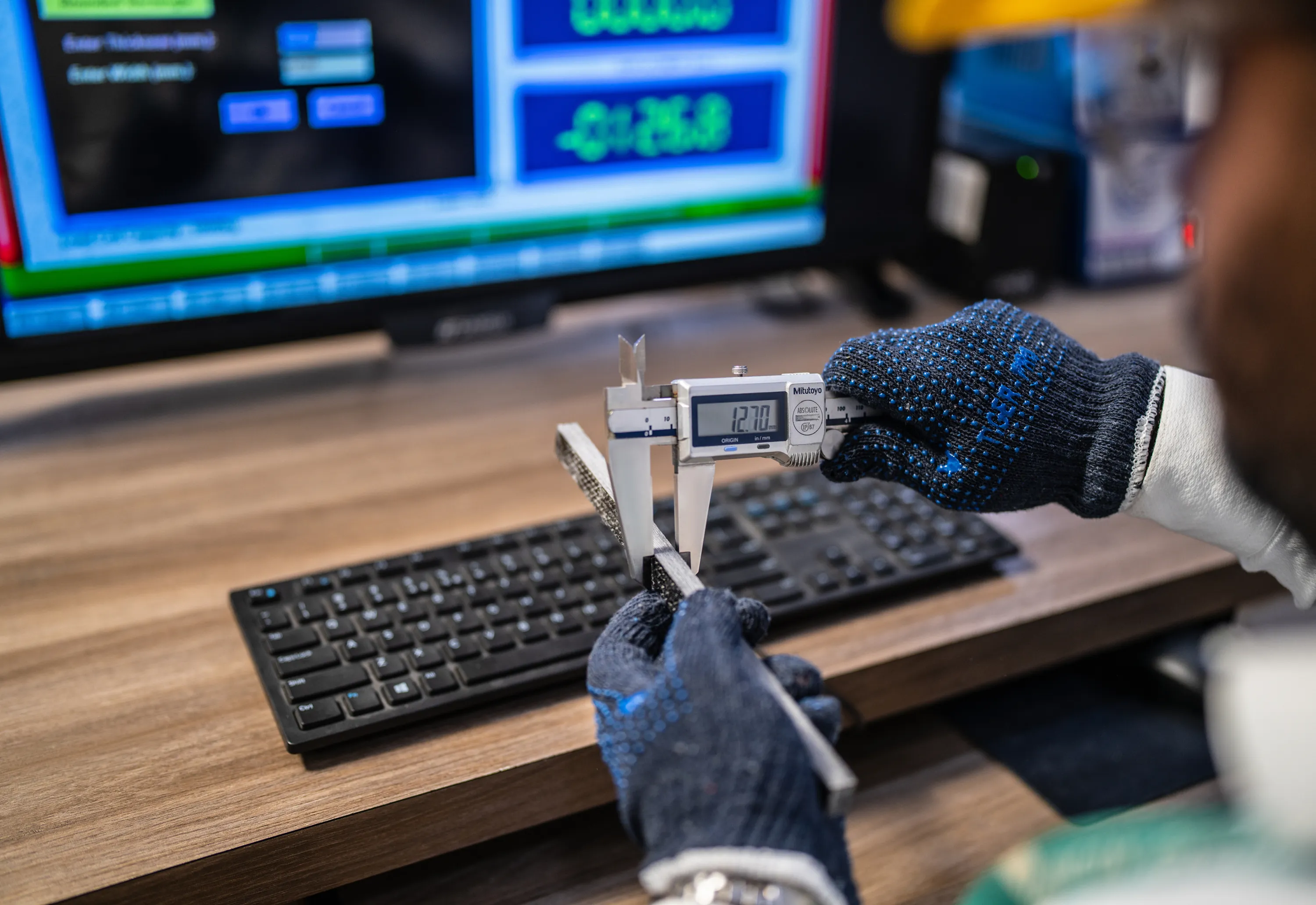
Beyond performance and structural tests, Encon's quality laboratory conducts tensile strength testing of composite laminates, flexural modulus testing, impact resistance testing, heat distortion temperature measurement, sound level measurement, resin content analysis, glass content verification, interlaminar shear strength testing, UV exposure resistance, chemical resistance testing, dimensional inspection at each manufacturing stage.
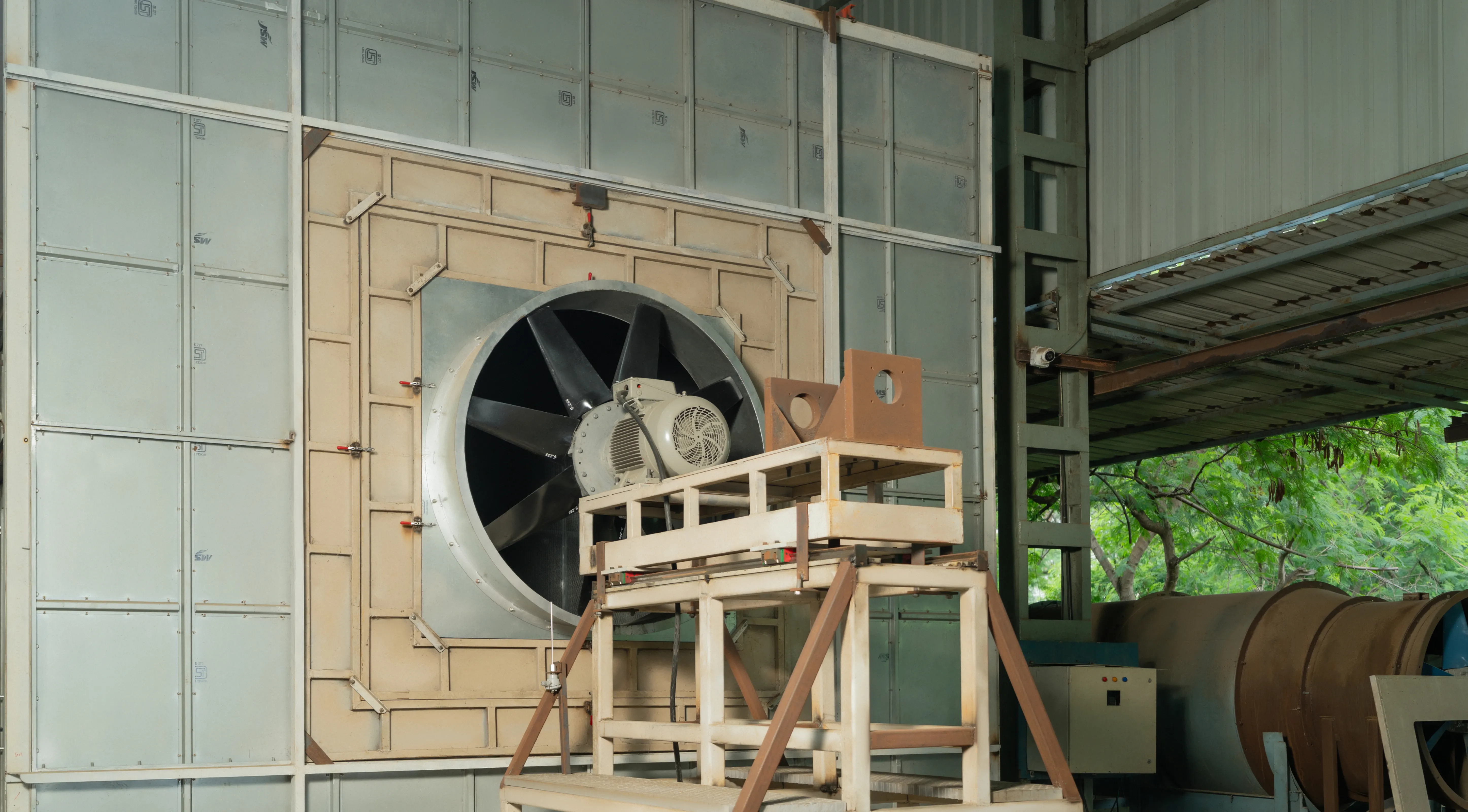
AMCA 210 Standard
13 in-house test types including India’s only AMCA 210 wind tunnel.
Encon's testing infrastructure verifies the design before installation, enabling its written performance guarantee.
Encon tests every product at thirteen points before it ships, because a company that cannot test its product cannot guaantee its performance.
Encon's wind tunnel facility is a design verification tool, not a quality check. It confirms whether the aerodynamic design delivered in manufacture matches what the CFD analysis predicted. The wind tunnel tests fan assemblies to the AMCA 210 (Air Movement and Control Association) performance standards and to IS 3588-1987 (Indian Standard for testing of axial-flow fans and centrifugal fans). It measures airflow, static pressure, input power, and efficiency at multiple operating points across the fan's performance curve. Where there is deviation, the design is corrected before production proceeds. AMCA 210 is the global reference for industrial fan performance testing. Encon's compliance with this standard is the technical foundation on which international buyers assess the credibility of its performance claims and trust the performance promise.
Every fan assembly is dynamically balanced to ISO 21940 Grade 6.3 on a computerised dynamic balancing machine. This balancing standard is the reason Encon's installations run for fifteen, twenty, or twenty-eight years without the mechanical degradation that ends the life of cheaper alternatives. Unbalanced fans cause vibration, which leads to bearing failure, structural fatigue, noise, and loss of efficiency. The Grade 6.3 standard specifies the maximum permissible residual imbalance across the operating speed range; the same standard applies to industrial pump impellers, compressor rotors, and precision machine tool spindles.
Encon defines reliable performance and identifies resonant conditions before installation by producing a Campbell diagram for every fan assembly. The diagram plots the fan's natural frequencies against its operating speed range, reinforcing Encon's commitment to dependable outcomes. Campbell diagrams are produced as a standard part of the engineering package for individual installations, making any identified resonance condition a design parameter. Most fan manufacturers do not produce them. A resonance condition discovered after installation is catastrophic, underscoring Encon's promise of proactive protection.
Every blade is structurally integrity-proof-load tested under loads exceeding design operating conditions. This confirms that the blade's laminate structure is performing as designed by applying a defined load at specific points and measuring the resulting deflection.
CFD analysis for each new blade design begins by simulating airflow over the blade profile under operating conditions. Encon's blade profiles are derived from NACA aerofoil sections, adapted for the pressure ratios and Reynolds numbers that characterise industrial cooling tower and air fin cooler applications.
The CFD model predicts efficiency, pressure development, noise level, and the conditions under which stall or separation might occur. The design is then refined through iteration and the CFD output is fed back into blade geometry modifications until the performance target is met in simulation before manufacture begins. Encon's core promise is a validated 15–30% power reduction before shipment, not estimates, supported by 35 years of field measurements. This clearly defines the brand promise.
IEEE PUBLICATION
In 2005, Encon collaborated with the Central Power Research Institute (CPRI) and the National Thermal Power Corporation (NTPC) on a research programme examining the performance improvement achievable in thermal power plant cooling towers through energy-efficient fan design.
The results of that research were presented and published at the IEEE Power Tech Conference in St. Petersburg, Russia, which is one of the most significant international forums for power systems engineering research.
Performance Enhancement of Cooling Towers in Thermal Power Plants through Energy Conservation
Central Power Research Institute (CPRI) and NTPC, India IEEE Power Tech Conference, St. Petersburg, Russia, 2005
Performance Enhancement of Cooling Towers in Thermal Power Plants through Energy Conservation
Central Power Research Institute (CPRI) and NTPC, India IEEE Power Tech Conference, St. Petersburg, Russia, 2005
Fan efficiency improvement of 32.03% and 30.81% at two NTPC Vindhyachal test installations.
Cooling water approach temperature reduced by 1.3°C. Documented using the clients' own instrumentation, independently verified, and published in the international peer-reviewed record.
Fan efficiency improvement of 32.03% and 30.81% at two NTPC Vindhyachal test installations.
Cooling water approach temperature reduced by 1.3°C. Documented using the clients' own instrumentation, independently verified, and published in the international peer-reviewed record.
Download Request
